
Picture the conversation: you and your family, friend group, or hobby group are sitting around talking about this awesome trip – maybe a family trip, friends’ getaway, milestone celebration, or group cruise you all want to take together, and then you (mistakenly) ask:

This is NOT.EVER the right question to ask your group.
That may seem counterintuitive, but hear me out. Everyone is excited at first, so you, as the organizer, tries to be considerate and asks what everyone wants. While your intentions are good, the outcome is unlikely to be great in this scenario.
One person wants the cheapest option. One wants luxury. One wants nonstop activity. One wants to sit by the pool. Someone says they are “easy,” but they are not really easy. Someone has strong opinions about food. Someone else has strong opinions about room types.
Before long, the trip that was supposed to bring people together starts feeling like a group project with no teacher. Here is the main idea here:

Don’t Preferences Matter?
The problem is not that people have preferences. Preferences matter. The problem is starting with preferences before there is a shared reason to take the trip, and reason to keep it to a certain type of trip. When you start with everyone’s wishlist, you are trying to build the trip from scattered details. When you start with the purpose, you have a filter for the details. Here are some great examples:
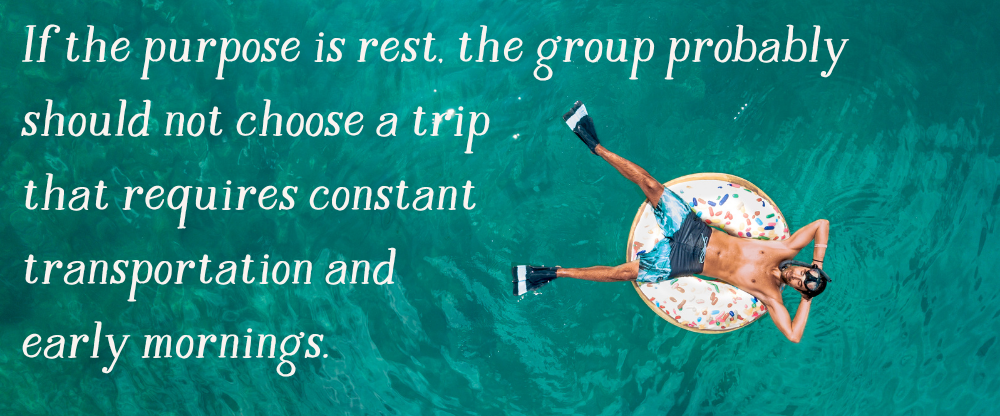
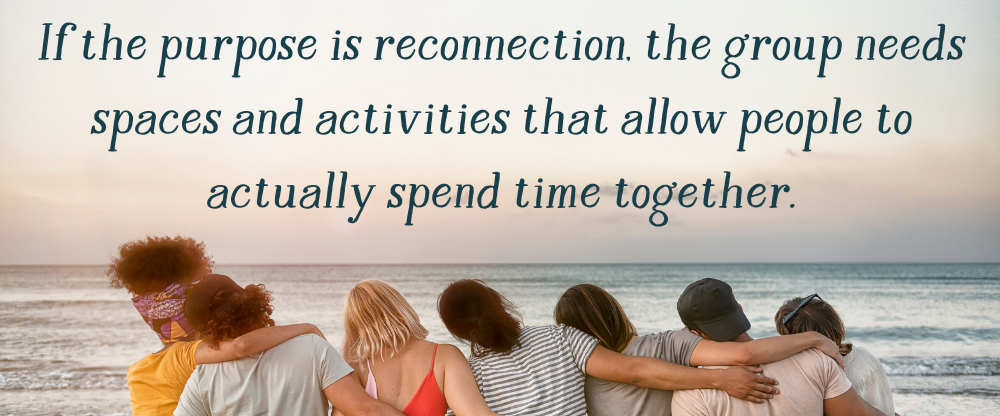


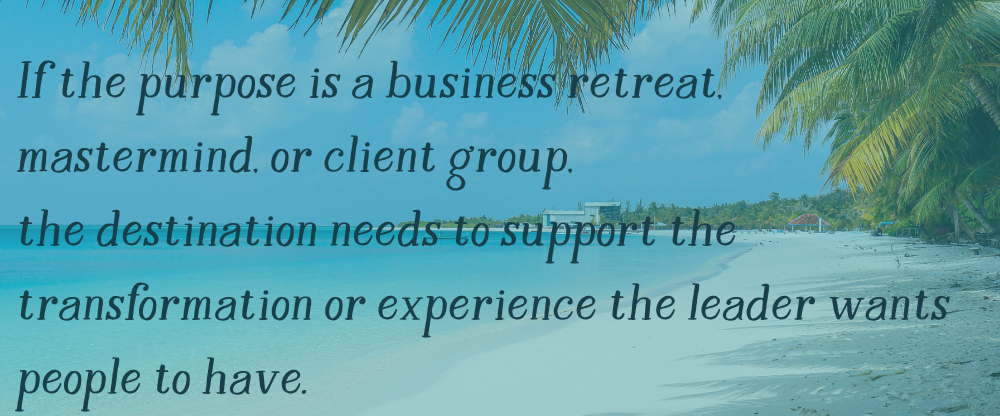
Too Many Opinions for a Trip Is Like to Too Many Cooks in the Kitchen!
Too many opinions too early can make planning feel impossible.
You can definitely gather everyone’s input – but you have to make sure it is crystal clear that this is not authority in making the final calls. The goal is not to say “ignore people.” Your goal is to say “do not turn every detail into a committee decision.”
Fewer Cooks = Protecting Relationships
One reason planning matters isn’t just because you want the logistics to work. It is because poor planning can create unnecessary tension between people. Confusion about budget, expectations, pace, room arrangements, food, transportation, and activities can all become relationship stress.
A well-planned group trip does not remove every hiccup, but it does reduce preventable friction. It helps people understand what kind of trip they are saying yes to before money is spent and emotions get involved.
How to Start Talking to Your Group
- Decide the purpose of the trip.
- Decide who the trip is really for.
- Decide the general budget comfort zone.
- Decide the pace: restful, active, balanced, or structured.
- Decide who makes the final call.
- Then collect preferences. This is key: you are not saying preferences do not matter. You are saying they belong later in the process, after the trip has a clear direction.

Remind The Group Why
Wrap up your starting steps by bringing it back to the purpose of group travel. A group trip is far from just a collection of reservations. It is the opportunity to make memories, strengthen relationships, celebrate something meaningful, reconnect with family or friends, or create a shared experience that people remember.
But that kind of trip rarely happens by accident. It happens when someone, like you, is willing to lead with purpose instead of getting buried in everyone’s wishlist.
Before you start collecting everyone’s opinions and trying to make sense of them alone, let’s talk.
That is where I can help. As your travel advisor, I can help take the scattered ideas, preferences, questions, budgets, timelines, and “what about this?” conversations and turn them into a clearer plan. I can help you compare options, think through the logistics, and keep the focus on the reason you wanted to travel together in the first place.
If you are dreaming about a family trip, multi-generational getaway, friends’ trip, group cruise, retreat, or special celebration, let’s make it easier from the beginning. The right trip starts with the right questions, and you do not have to figure them all out alone.